Tired of dinner chaos? How our smart table transformed family meals for good
Family dinners used to be stressful—missing utensils, clashing schedules, and constant screen distractions. I felt disconnected, even when we were all at the same table. Then we brought in a smart dining setup that didn’t just upgrade our tableware, but redefined how we connect. It wasn’t about flashy tech, but creating moments that mattered. This is how we turned nightly chaos into calm, meaningful connection—without losing our sanity. If you’ve ever sat across from your kids and wondered, When did we stop talking?, this is for you. Because what if the solution wasn’t more willpower—but a little help from technology designed to support real life?
The Breaking Point: When Simple Dinners Felt Impossible
There was a time when dinner at our house felt less like a meal and more like a fire drill. I’d spend an hour cooking, only to be met with blank stares, half-chewed bites, and fingers still swiping on tablets. My son would ask for his fork after sitting down. My daughter would remember, halfway through, that she had a science project due the next morning—on a topic she hadn’t even started. My husband? He’d be on a work call, eating standing up, then disappearing back to his laptop. We were all in the same room, but we might as well have been in different time zones.
It wasn’t just the mess or the missed homework. It was the silence. The absence of laughter. The way we’d say “How was your day?” and get a one-word answer in return. I started dreading dinner instead of looking forward to it. And I know I’m not alone. So many of us are juggling jobs, kids, school, and endless to-do lists. We want to connect, but by the time we sit down, we’re too tired to fight for it. The table became a battleground of distractions, not a place of belonging.
One night, after my youngest spilled milk because she was watching a video on her phone, I snapped. Not at her—she didn’t even notice. I snapped at the situation. I looked around and thought, This isn’t working. We’re together, but we’re not present. That was the moment I realized: we didn’t need another parenting book or a stricter screen rule. We needed support. Not a babysitter, not a life coach—but something that could quietly help us function better as a family. That’s when I started looking into smart home solutions, not for luxury, but for peace.
Discovering the Smart Dining Table—More Than Just a Gadget
I’ll admit it—I was skeptical. When I first saw a smart dining table online, I thought it was one of those futuristic gadgets made for tech influencers, not real families with sticky fingers and laundry piles. The videos showed glowing surfaces and holograms, and I thought, No thank you. I don’t need my dinner table to look like a spaceship. But then I read about a different kind of smart table—one designed for real homes, not sci-fi sets.
This wasn’t about touchscreens on the surface or robot arms serving food. It was about a table that listened to our life and helped us stay in sync. It had built-in wireless charging, yes, but more importantly, it connected to our family calendar, reminded us of upcoming events, and even warmed plates before serving. The design was warm—solid wood with subtle tech embedded underneath. It looked like a piece of furniture, not a gadget. That mattered. I didn’t want something that screamed “high-tech.” I wanted something that whispered, Let me help.
We ordered a model that fit our kitchen space and waited two weeks for delivery. When it arrived, my kids were more excited about the box than the table. But within days, things started to shift. The first thing we noticed? No more “Where’s my fork?” questions. The table has gentle LED indicators under each place setting that light up when it’s time to sit—like a soft, friendly nudge. And because it syncs with our phones, it knows when everyone is home. If someone’s running late, it adjusts the mealtime suggestion automatically. No more cold food or awkward waiting.
What surprised me most was how unobtrusive it was. I expected to have to learn an app, set up profiles, troubleshoot connections. But it was designed for families who don’t have time for that. Setup took less than an hour. The kids loved picking their favorite color for their place setting light. My husband appreciated that it reminded him of school pickups. And me? I just felt… relieved. Like we finally had a teammate at the table.
How It Organizes More Than Just Dinner
Here’s the thing I didn’t expect: the table didn’t just change dinner. It changed how we run our whole household. Before, I was the family’s memory. I remembered dentist appointments, permission slips, soccer practices, grocery needs. I had lists in my phone, on the fridge, in my purse. And still, things slipped through. The mental load was exhausting. I’d lie awake at night thinking, Did I sign that field trip form? Is the pediatrician next Tuesday or Wednesday?
The smart table became our shared brain. It pulls information from each family member’s calendar and displays key events on a small, discreet screen built into the side—like a digital corkboard that updates itself. Every morning, the kids check in before school. “Mom, the table says I have band rehearsal today.” “Dad, it reminds you to bring my gym shoes.” It’s not pushy. No loud alarms. Just soft chimes and visual cues that keep us on track.
One night, I realized I hadn’t written a single reminder on the fridge in over a month. That’s when it hit me: I wasn’t the only one remembering things anymore. The table wasn’t replacing us—it was freeing us. We stopped missing events. No more last-minute panic about forgotten costumes for the school play. No more double-booking conflicts. And the best part? I stopped feeling like the household manager on overdrive. The kids started taking more responsibility because the system made it easy to see what was coming up.
It even handles grocery lists. When someone uses a smart kitchen scale or scans a pantry item, the table logs what we’re running low on. On Sunday evenings, it suggests a shopping list based on the week’s meals and inventory. We can edit it together as a family. My daughter loves adding “fun snacks” with a wink. But the truth is, we waste less food, shop faster, and never show up to make spaghetti without pasta. That might sound small, but when you’re juggling five schedules, small wins feel like miracles.
Rebuilding Connection One Meal at a Time
The biggest change wasn’t in our schedule—it was in our conversations. At first, the kids treated the table like a novelty. “Can it play music?” “Can I change my light to rainbow mode?” But within a week, something shifted. Because dinner started on time, because the food was warm, because no one was rushing or stressed, we actually had time to talk.
The table has a feature called “Conversation Starters” that suggests a simple question every night—things like “What made you smile today?” or “If you could have any superpower, what would it be?” At first, my son rolled his eyes. But then he answered. And then he asked me the question. Now, it’s the part of dinner he looks forward to most. “Don’t skip the question, Mom!” he’ll say if I try to rush.
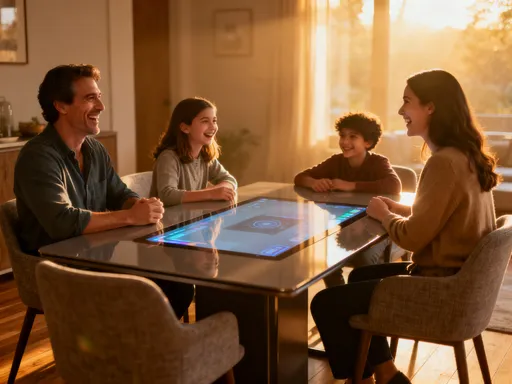
There’s also a “Family Focus Mode” that gently dims the lights, turns off non-essential notifications, and asks everyone to place their phones in a charging drawer built into the table’s base. It’s not forced. It’s inviting. And because the table itself becomes the center of attention—warm, lit, present—we naturally look up. We make eye contact. We laugh. We argue sometimes, yes, but even those moments feel more connected than the old silence.
I’ll never forget the night my daughter said, “I like dinner now.” Just like that. No drama. No sarcasm. She meant it. And I realized—so do I. Dinner isn’t something I have to survive anymore. It’s something I want to be part of. The table didn’t create connection, but it made space for it. It removed the noise so we could hear each other again.
Practical Steps to Bring Smart Dining Home
If you’re curious about trying something like this, I get it—starting can feel overwhelming. You don’t need to buy the most expensive model or turn your whole kitchen into a lab. Here’s what worked for us: we started with just the basics. We picked a table that fit our budget and space, and we only turned on the calendar sync and plate warming at first. We let the kids get used to the lights and the routine before adding more.
Integration was easier than I thought. The table works with common apps like Google Calendar and Apple Reminders, so we didn’t have to switch systems. We connected it to our home Wi-Fi, and it learned our patterns over time—like when we usually eat, who sits where, what temperature we like for plates. It’s not AI that reads minds, but it’s smart enough to adapt.
Privacy was a concern for my husband. He asked, “Who has access to our data?” Great question. We looked into it together. The company uses end-to-end encryption, doesn’t sell data to third parties, and lets you control what’s shared. We decided to disable voice recording and only use text-based notifications. You can also set up guest modes and privacy screens. It’s not about being paranoid—it’s about being informed. And honestly, after reading the security details, I felt more confident than I do with some of our other smart devices.
My biggest tip? Involve your family from the start. Let the kids pick their light colors. Have a family meeting to talk about how you’ll use the features. Set boundaries together—like “Phones go in the drawer during Family Focus Mode, but you can take them out after dessert.” When everyone feels part of the decision, they’re more likely to embrace it. And be patient. It took us two weeks to fully adjust. There were glitches. My son once asked the table to play heavy metal during dinner (it didn’t). But we laughed, reset, and kept going.
Beyond the Table—A Ripple Effect on Daily Life
I didn’t expect the changes to spill over into the rest of our days—but they did. Mornings are calmer because the table reminded us the night before about early drop-off. Bedtimes are smoother because we’re not scrambling to finish homework that was due today. Weekends feel more intentional because we’re not playing catch-up from missed events.
There’s been an unexpected emotional shift, too. Less tension. Fewer arguments about forgotten things. More moments of “We’ve got this.” My husband says he feels more connected to the kids’ lives. My daughter started journaling her answers to the nightly questions. My son, who used to shut down when asked about his day, now volunteers stories unprompted. It’s like the table didn’t just organize our time—it organized our hearts.
Sleep has improved. No more late-night anxiety about tomorrow’s schedule. We’re more active as a family—going for walks, playing board games, even cooking together—because we’re not drained from constant mental juggling. The table didn’t give us more hours in the day, but it gave us more peace in the hours we have.
And here’s the quiet miracle: we’ve started looking forward to being together. Not because we’re perfect, but because we’re present. The table didn’t fix everything—but it helped us show up better. It’s like having a calm, wise friend at the center of our home, quietly saying, “You’ve got this. Let me help you breathe.”
Why This Isn’t Just About Technology—It’s About Living Better
At the end of the day, this isn’t really about a smart table. It’s about what happens around it. It’s about the stories shared, the laughter over burnt garlic bread, the way my daughter now reaches for my hand when she says goodnight. Technology didn’t create these moments—but it made room for them.
So many of us think we need to do more, be more, try harder to make family life work. But sometimes, what we really need is a little support. Something that carries the weight of the small things—so we can focus on the big ones. This table didn’t make us a perfect family. But it helped us become a connected one.
If you’re tired of dinner feeling like a chore, if you miss the sound of your family’s voices without a screen in between, I want you to know: there’s hope. You don’t have to choose between technology and togetherness. The right tech can actually bring you closer. It’s not about replacing human connection—it’s about removing the barriers to it.
You deserve meals that feel good. You deserve to look across the table and see your people—really see them. And you deserve to feel like you’re not alone in the chaos. Maybe your solution isn’t a smart table. Maybe it’s a shared family app, a meal planning tool, or a simple rule: phones down, voices up. Whatever it is, choose something that helps you breathe, connect, and reclaim the moments that matter. Because family isn’t about perfection. It’s about presence. And sometimes, all we need is a little help to be right here, together.