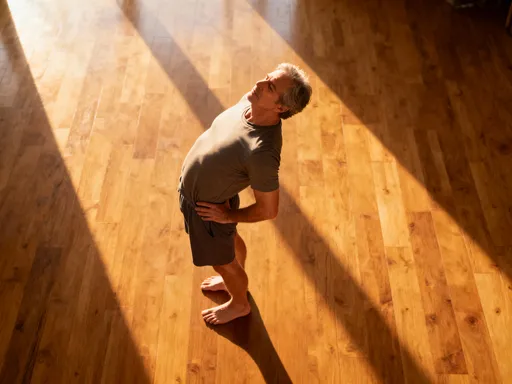
How I Rebuilt My Strength After Injury – Real Talk on Smarter Recovery
Recovering from an injury isn’t just about waiting—it’s about moving right. I learned this the hard way after a setback that left me weak and frustrated. Through guided rehab training, I discovered how small, consistent actions can create real progress. This journey taught me that prevention and recovery go hand in hand. If you're rebuilding strength or want to avoid future issues, this is for you—no medical jargon, just honest insights backed by science and experience.
The Wake-Up Call: When My Body Said "No"
It started with a simple misstep—nothing dramatic, just a twist while lifting groceries. At first, I brushed it off. "I’ll be fine," I told myself, as so many do. But the discomfort didn’t fade. It grew. Within days, routine tasks like climbing stairs or standing from a chair became painful. I couldn’t carry my laundry basket without wincing. My independence, something I’d taken for granted, was slipping away. That’s when reality hit: my body was no longer cooperating. The injury wasn’t life-threatening, but it was life-altering in subtle, daily ways.
What followed was a period of emotional exhaustion as much as physical limitation. I felt isolated, embarrassed even, that something so ordinary had derailed me. I missed walks with friends, gardening, and even folding laundry without pausing. There was grief in losing what I once did without thought. I tried to push through, convinced rest was laziness. I stretched too far, lifted too soon, and each attempt set me back. The harder I pushed, the slower I healed. This cycle of frustration and fatigue deepened my sense of helplessness.
Looking back, the signs were there long before the injury fully took hold. Occasional stiffness in the mornings, a nagging ache after long days on my feet—small warnings I dismissed as part of aging or stress. But the body doesn’t lie. Ignoring those early cues turned a manageable strain into a months-long recovery. Pain is not just a symptom; it’s a message. And when we silence it with willpower instead of listening, we risk prolonging the very thing we’re trying to escape. The true wake-up call wasn’t the injury itself, but the realization that I had stopped respecting my body’s limits.
Rehabilitation Training: More Than Just Exercise
When I finally sought help, I expected a list of stretches and a pat on the back. What I got was something far more structured and intentional: rehabilitation training. This isn’t just about doing exercises to pass the time. It’s a science-based process designed to restore function, rebuild strength safely, and retrain movement patterns that injury has disrupted. Unlike general fitness, which often focuses on intensity and endurance, rehab training prioritizes precision, control, and progression tailored to healing tissues.
One of the most important distinctions I learned is that rehabilitation is not the same as physical therapy, though they work hand in hand. Physical therapy often addresses the acute phase—diagnosing the problem, reducing pain, and initiating healing. Rehabilitation training, especially in the subacute and chronic phases, takes over to rebuild what was lost. It’s the bridge between recovery and return to daily life. Think of it this way: if physical therapy is the emergency room for movement, rehab training is the long-term care plan that ensures you don’t end up back in the ER.
The science behind it is both fascinating and reassuring. When tissue is injured—whether muscle, tendon, or ligament—it goes through predictable healing stages: inflammation, repair, and remodeling. During remodeling, which can last weeks or months, the body lays down new collagen fibers. But these fibers are initially disorganized. Without proper loading and movement, they form in a haphazard way, leading to weak, stiff, or dysfunctional tissue. Rehab training applies controlled stress to guide this healing process, encouraging fibers to align correctly and regain strength.
Another key element is neuromuscular re-education. After an injury, the brain often "forgets" how to activate certain muscles properly. You might intend to use your glute when standing, but your body compensates by overusing your lower back. Rehab exercises help reconnect the brain to the muscle, restoring proper firing patterns. This isn’t just about strength—it’s about coordination, timing, and control. Over time, these small corrections add up to smoother, safer movement.
Why Prevention Starts in Recovery
One of the most powerful lessons I learned is that recovery isn’t just about fixing the past—it’s about protecting the future. Proper rehabilitation doesn’t merely restore you to where you were; when done right, it can leave you stronger and more resilient than before. This is where prevention truly begins. Every step taken during recovery lays the foundation for long-term health, reducing the risk of re-injury and even lowering susceptibility to chronic conditions linked to inactivity.
Studies show that individuals who complete structured rehab programs are significantly less likely to experience repeat injuries. For example, someone recovering from a knee strain who follows a guided program has a much lower chance of reinjuring that joint compared to someone who returns to activity too soon or without proper preparation. This isn’t just about avoiding pain—it’s about preserving mobility, independence, and quality of life as we age.
Rebuilding strength after injury also combats the downward spiral of inactivity. When pain limits movement, people naturally become more sedentary. Over time, this can contribute to weight gain, decreased cardiovascular health, and muscle atrophy. These changes increase the risk of conditions like type 2 diabetes, hypertension, and osteoporosis. A well-designed rehab program interrupts this cycle by reintroducing safe, progressive movement. It’s not just healing a joint—it’s protecting the entire body.
Moreover, the habits formed during recovery often extend beyond the injured area. As I rebuilt strength in my core and hips, I noticed improvements in my posture, balance, and energy levels. I began walking more, standing taller, and moving with greater confidence. These shifts didn’t happen overnight, but they became part of a new normal—one where movement was no longer something I feared, but something I valued. In this way, recovery becomes a gateway to a more active, health-conscious lifestyle.
The Core Principles That Actually Work
Not all rehab approaches are created equal. What made the difference for me wasn’t just doing exercises—it was doing them the right way, guided by principles that support sustainable healing. Three stood out: progressive loading, mind-muscle connection, and the recognition that rest is not passive, but an active part of recovery.
Progressive loading is the cornerstone of effective rehab. It means gradually increasing the demand on healing tissue in a controlled way. This could mean adding a small amount of resistance, increasing repetitions, or improving range of motion over time. The goal is to challenge the body without overwhelming it. Too little load, and tissues don’t adapt. Too much, and you risk setbacks. Finding that sweet spot requires patience and attention. For instance, I started with bodyweight bridges to activate my glutes. Over weeks, I added resistance bands, then increased hold times, then progressed to single-leg variations. Each step was small, but cumulative.
Mind-muscle connection is another powerful tool. It sounds simple—focusing on the muscle you’re trying to use—but it’s often overlooked. After injury, compensation patterns become automatic. Your body takes shortcuts to avoid pain, even when the tissue has healed. By consciously engaging the right muscles during exercises, you retrain your nervous system. I learned to pause during a squat and ask: Am I feeling this in my quads and glutes, or is my lower back taking over? That awareness made all the difference.
Finally, rest and recovery are not signs of weakness—they are essential components of healing. Sleep, hydration, and stress management directly impact tissue repair. Inflammation needs time to resolve. Muscles need time to rebuild. Pushing through every day without rest leads to burnout and delayed progress. I learned to honor rest days, to listen to fatigue, and to view recovery as an active investment in my long-term strength. Healing isn’t linear, and that’s okay.
Building a Practical Rehab Routine
Starting a rehab routine can feel overwhelming, especially when you’re unsure where to begin. The key is to assess your current state honestly and build from there. I began by evaluating three things: mobility (how freely I could move), strength (how much load I could handle), and pain response (what movements triggered discomfort). This wasn’t about performance—it was about baseline awareness.
With guidance from my therapist, I built a routine that followed a clear structure: warm-up, activation, targeted exercises, and cooldown. The warm-up wasn’t intense—just five to ten minutes of light movement like marching in place or arm circles to increase blood flow. Activation exercises followed, designed to "wake up" key muscles that were underactive. For me, that meant glute bridges and band walks to engage my hips before standing exercises.
The core of the routine focused on targeted movements that addressed my specific needs. These weren’t flashy or exhausting—just consistent, controlled reps. I used simple tools: resistance bands, a yoga mat, and my own body weight. These are accessible, affordable, and effective. For example, a basic clamshell with a band strengthened my hip abductors, which in turn improved my gait and reduced knee strain. I didn’t need a gym or expensive equipment—just consistency and attention to form.
The cooldown was just as important. Gentle stretching, deep breathing, and sometimes foam rolling helped my body transition out of exercise mode. It also gave me time to reflect: How did I feel during the session? Was there any new pain? What improved? This reflection became part of my routine, helping me track progress and adjust as needed. Over time, this structure became second nature—a daily ritual of care rather than a chore.
Common Mistakes People Make (And How to Avoid Them)
Recovery is hard, and it’s easy to fall into traps that slow progress. One of the most common mistakes is pushing too hard too soon. I was guilty of this—eager to "get back to normal," I’d do extra reps or skip steps. But the body doesn’t respond well to sudden spikes in demand. Healing tissues need time to adapt. Rushing leads to setbacks, frustration, and sometimes long-term damage. Patience isn’t passive—it’s a discipline.
Another pitfall is skipping phases or self-diagnosing. Just because a friend had a similar injury doesn’t mean your path should be the same. Every body is different. I once tried a YouTube exercise I thought would help, only to flare up my symptoms. What works for one person may not be right for you. Diagnosis and progression should come from a licensed professional who can assess your unique situation. Trust the process, not the internet.
A third mistake is relying solely on passive treatments. Heat, ice, massage, and ultrasound can provide temporary relief, but they don’t rebuild strength. I used to think that if my pain was gone, I was healed. But pain is a poor indicator of tissue readiness. Without active rehab, I risked re-injury the moment I returned to daily demands. Passive treatments have their place, but they should support—not replace—movement-based recovery.
The solution is simple but not easy: follow a guided plan, progress steadily, and listen to your body. Small, consistent actions outperform intense, sporadic efforts every time. Healing isn’t about heroics—it’s about consistency, patience, and respect for the process.
Staying Consistent: From Short-Term Fixes to Long-Term Habits
Motivation fades. That’s normal. What matters is building habits that last beyond the initial enthusiasm. In the early weeks of rehab, I relied on external reminders—alarms, sticky notes, scheduled sessions. But over time, I shifted toward internal motivation: focusing on how good it felt to move without pain, to carry groceries again, to walk without limping.
Setting realistic expectations was crucial. I had to let go of the idea that I’d be "back to normal" in a few weeks. Healing takes months, sometimes longer. Instead of measuring progress by speed, I began celebrating small wins: holding a plank for five more seconds, climbing stairs without holding the rail, sleeping through the night without discomfort. These moments, though small, built confidence and reinforced my commitment.
Tracking progress helped too. I kept a simple journal—just notes on how exercises felt, any changes in pain, and daily activities I could do more easily. Reviewing it weekly showed me how far I’d come, even when daily changes felt invisible. This wasn’t about perfection—it was about awareness and continuity.
Eventually, rehab exercises became part of my lifestyle. I no longer saw them as "therapy," but as maintenance—like brushing my teeth or eating well. The movements that once felt foreign became natural. I started incorporating them into daily life: doing a few glute bridges while watching TV, stretching during commercial breaks, checking my posture while standing in line. This integration turned recovery into prevention, and effort into habit.
Conclusion: Strength Isn’t Just Physical—It’s Smart
Rebuilding strength after injury taught me that true resilience isn’t just about how much you can lift or how fast you can move. It’s about how wisely you listen, adapt, and care for your body over time. Smart rehabilitation isn’t a shortcut—it’s a commitment to long-term health. It blends science, patience, and self-awareness into a practice that goes far beyond healing a single injury.
The journey revealed that recovery and prevention are not separate goals—they are two sides of the same coin. Every rep, every rest day, every mindful movement was an investment in a future where I could move freely and confidently. It wasn’t always easy, but it was always worth it.
If there’s one thing I hope you take away, it’s this: never underestimate the value of professional guidance. Always consult a licensed physical therapist or healthcare provider before starting any rehab program. They can assess your condition, design a safe plan, and adjust it as you progress. Your body is unique, and your recovery should be too.
In the end, treating your body with care today isn’t just about avoiding pain tomorrow. It’s about honoring the incredible machine that carries you through life. Strength isn’t just muscle—it’s the wisdom to move well, recover fully, and live fully. And that’s a promise worth keeping.